. . . and the Republicans are likely to lose their Horst Wessel:
The doctors _ whose names were blacked out _ said that the bullet holes were so close together that it appeared the Army Ranger was cut down by an M-16 fired from a mere 10 yards or so away. Ultimately, the Pentagon did conduct a criminal investigation, and asked Tillman's comrades whether he was disliked by his men and whether they had any reason to believe he was deliberately killed. The Pentagon eventually ruled that Tillman's death at the hands of his comrades was a friendly-fire accident. . . . In his last words moments before he was killed, Tillman snapped at a panicky comrade under fire to shut up and stop "sniveling." Army attorneys sent each other congratulatory e-mails for keeping criminal investigators at bay as the Army conducted an internal friendly-fire investigation that resulted in administrative, or non-criminal, punishments. . . . No evidence at all of enemy fire was found at the scene _ no one was hit by enemy fire, nor was any government equipment struck. . . . Tillman's mother, Mary Tillman, who has long suggested that her son was deliberately killed by his comrades, said she is still looking for answers and looks forward to the congressional hearings next week. The documents show that a doctor who autopsied Tillman's body was suspicious of the three gunshot wounds to the forehead. The doctor said he took the unusual step of calling the Army's Human Resources Command and was rebuffed. He then asked an official at the Army's Criminal Investigation Division if the CID would consider opening a criminal case. "He said he talked to his higher headquarters and they had said no," the doctor testified. It has been widely reported by the AP and others that Spc. Bryan O'Neal, who was at Tillman's side as he was killed, told investigators that Tillman was waving his arms shouting "Cease fire, friendlies, I am Pat (expletive) Tillman, damn it!" again and again. But the latest documents give a different account from a chaplain who debriefed the entire unit days after Tillman was killed. The chaplain said that O'Neal told him he was hugging the ground at Tillman's side, "crying out to God, help us. And Tillman says to him, `Would you shut your (expletive) mouth? God's not going to help you; you need to do something for yourself, you sniveling ..."
The quintessential way to experience Wall Drug seems to be to stand at the wall of clippings reading about people standing at the wall of clippings reading about people standing at the wall. (25; "Ted Hustead is Dead at 96; Built the Popular Wall Drug")
The idea was that a grocer would pay Mr. Carlson $14.50 for stamps that could be exchanged for products that cost $10 wholesale but had a much higher retail value. That made the stamps attractive to the grocer and to the store's customers, but not at first glance to Mr. Carlson, whose $4.50 spread would barely cover costs and overhead. The magic of the business was that while the grocer would pay for the stamps as they were issued, it might be months before customers accumulated enough stamps to redeem them (a four-slice toaster proved to be the most popular premium) and some would not be redeemed at all, leaving Mr. Carlson with the floatthe use of the moneyfor other investments. (55; "Curtis L. Carlson, 84, Founder of Trading Stamp Conglomerate")
As his longtime friend and admirer Robert Evans, the former head of Paramount, described it in his 1994 book, The Kid Stays in the Picture, Mr. Korshak could work wonders with a single phone call, especially when labor problems were an issue.
"Let's just say that a nod from Korshak," Mr. Evans wrote, "and the teamsters change management. A nod from Korshak, and Santa Anita closes. A nod from Korshak, and Vegas shuts down. A nod from Korshak, and the Dodgers can suddenly play night baseball."
. . . Mr. Korshak . . . also used his clout on lesser matters.
Among the stories circulating yesterday, for example, was one about the time the comedian Alan King was turned away at a plush European hotel by a desk clerk who insisted that there were simply no rooms available. Mr. King used a lobby phone to call Mr. Korshak in Los Angeles, and before he hung up, the clerk was knocking at the door of the phone booth to tell Mr. King that his suite was ready.
. . . It was a reflection of his power that when Mr. Korshak showed up unexpectedly at a Las Vegas hotel during a 1961 teamsters' meeting, he was immediately installed in the largest suite, even though the hotel had to dislodge the previous occupant: the union's president, Jimmy Hoffa. (66-7, 68; "Sidney Korshak, 88, Dies; Fabled Fixer for the Chicago Mob")
Indeed, after a flare-up of allergies, an occupational hazard of a musty business, forced Mr. Tannen to retire, and Mr. Biblo to open a smaller store that his wife Frances still operates in Brooklyn Heights, Mr. Biblo said reading every book in the public library was not his only unfulfilled ambition.
He had also, he said, dreamed of going to Africa to look for Tarzan. (79; "Jack Biblo, Used Bookseller for Half a Century, Dies at 91")
Six years later she received a teaching certificate, strapped on a six-shooter and set out for the town of Presidio on the Rio Grande, a major crossing point for Pancho Villa's raiders. When her father accused her of going off on a wild-goose chase, she stood her ground. "I'll gather my geese," she said, a retort that established her independence and provided the title for an autobiography. . . .
Though Mr. Stillwell owned a 22,000-acre spread 45 miles south of Marathon, he was a taciturn, hard-drinking, poker-playing widower more than twice her age. He may not have seemed a suitable husband, but the first time he drove up in his sporty Hudson Super Six, she later explained, "He decided he liked me, and I decided I liked that car."
. . . In addition to regaling tourists, she worked on a sequel toI'll Gather My Geese, her autobiography. Now being completed by a granddaughter, it is titled,My Goose Is Cooked. (84, 85, 86; "Hallie C. Stillwell, A Rancher and Texas Legend, Dies at 99")
It was only after he had made his way through the throngs at the cemetery gates that Mr. Saunders learned that the ministers, objecting to an open-air ceremony where they would be exposed to potential snipers, had not appeared.
When Mr. Oswald's mother asked him to fill in, Mr. Saunders obliged. He had left his Bible in his car, but as the small, forlorn Oswald family looked on from a row of folding chairs, he recited the 23d Psalm . . . and a passage from John 14 . . . from memory, and delivered one of the briefest eulogies ever:
"Mrs. Oswald tells me that her son, Lee Harvey, was a good boy and that she loved him. And today, Lord, we commit his spirit to Your divine care."
Within weeks his gesture had prompted an outpouring of financial support for the impoverished Oswald family. (105; "Rev. Louis Saunders, 88, Dies; Buried Oswald")
CNN just did a "report"their usual bang-up jobon salvia divinorum. The reporter intelligently noted that salvia's effects "are similar to LCD" (yes, she actually said "LCD") and that one motherthere's always the ignorant, weeping parent in these anti-substance propaganda pieces"blames salvia for her son's death." Her son couldn't possibly have been suicidal to begin with, I'm sure. Had to be the drug. Go ahead and comfort yourself with that fictionit's called the Linkletter Pill. Stupid parents have drugged themselves with it for decades, to the detriment of public knowledge and experience. And a further Good Job to CNN for pimping its anti-substance message at the end of the report by urging viewers to visit the CNN website to see "what's being done" to "make salvia illegal." And another course of bricks goes up in the wall of uninformed reassurance.
15jul2007 Hey kids! How many sociopoliticalphilosophical problems can you spot in the following story?
A girl died Saturday after falling from an amusement ride at Lifest. . . .
Music at the Christian festival had resumed around 7:30 p.m. until an announcement about the death was made from a stage just after 9:30 p.m. Wes Halula, director of communications for Lifest organizers Life! Promotions, said the music scheduled for the evening went on as planned, Halula said, though with more mellow, worship songs. "We thought it would be the right thing for them to do to play tonight," Halula said. . . .
A state inspector is expected on site today to look into the accident. Amusement rides are overseen by the state's Department of Commerce and Air Glory is regulated by the state. . . . The police were investigating, Weyers said, because the ride is regulated by the state of Wisconsin.
"We cover our bases like an industrial accident," Weyers said.
After the accident, all activities and concerts at Lifest were suspended for about two-and-a-half hours and Lifest officials were asking festival attendees to pray.
Music resumed on the grounds around 7:30 p.m., but Halula said some of the comedy events had been cancelled. . . .
Halula said a special area was set up for those who witnessed the accident to talk with pastors and counselors. "We're taking it really seriously. It doesn't feel very festive right now," Halula said. . . .
Rachel Kohn, 17, of Oshkosh, was in the merchandise area on the festival grounds when the accident occurred at the nearby ride. . . .
(You can see it for yourself if you have pop-ups disabled and click the Click for larger image link on this page. If you don't have pop-ups disabled, the pop-up will show you the exact same size image. I like the error message better.)
06jul2007 The Disney-fication of the world proceeds apace
Actual radio station promo I just heard: "No suggestive lyrics here to embarrass you in front of your kids or clients!"
so i was playing this song by cat stevens earlier, and i was worried about the copyright issues. then i thought, hey, that dude can’t even get in the country. then i thought, hey , can i get back in the country?
People like myself want not a world in which murder no longer exists (we are not so crazy as that!) but rather one in which murder is no longer legitimate. Albert Camus, Neither Victims Nor Executioners (p. 25)
When people nowadays hear the word, "revolution," they think of a change in property relations (generally collectivisation) which may be brought about either by majority legislation or by a minority coup.
This concept obviously lacks meaning in present historical circumstances. For one thing, the violent seizure of power is a romantic idea which the perfection of armaments has made illusory. Since the repressive apparatus of a modern State commands tanks and airplanes, tanks and airplanes are needed to counter it. 1789 and 1917 are still historic dates, but they are no longer historic examples. (33, 35)
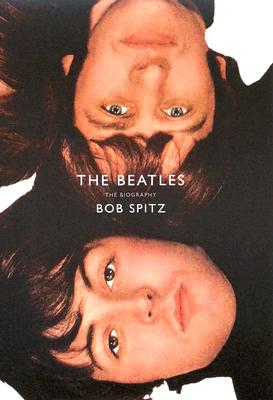
Certainly John wasn't told anything about it, much less that he had a sister. (By all accounts, he never discovered her existence.) Without further delay, the baby was taken away from Julia and given to a Norwegian Salvation Army captain, who removed the newborn to Scandinavia, which was the last anyone ever heard of her. (27)
It didn't take long for them to hit on a surefire formula: volume. It got people off. More than anyone so far, the Beatles realized that the function of a bar band wasn't to promote artistry, expand the musical genre, or even entertain. Bar bands really weren't performers in the conventional sense, but rather were agitators. (212)
Catering to the masses, the Butlins camps were governed by vox populi, and by 1960 it was clear that rock 'n' roll had crystallized as a mainstream trend. . . . The Beatles, however, avoided Butlins like church. (323)
So as not to jeopardize the [Butlins] gig, the two boys had rented a trailer, laying out a precious two pounds per week, and parked it rather presumptuously opposite the Butlins front gates. "Ringo had one end, I had the other," Byrne recalled. They decorated it with posters of American rock 'n' roll artists and brought the record player out of hiding. . . . And it was there, on that Wednesday morning in August, just after ten o'clock, they were so rudely awakened by a knock.
Drowsily, Byrne answered the door. "It was John and Paul," Johnny recalls vividly. "As soon as I saw them, I knew what they wanted. They wanted Ringo." (327-8)
Columnist Nat Hentoff reported that a spokesman for the U.S. Treasury Department had made the Beatles "an economic issue," due to what he called "a gold drain" resulting from their record sales and personal appearances. (482)
The Beatles defused any potential controversy with their now-expected witty one-liners, stumbling only when it came to the news that while they were overseas, the prime minister, Sir Alec Douglas-Home, named the Beatles as his "secret weapon" in diplomatic relations with the Americans. It actually "flattered" the boys that the PM knew their names. "The thing is, I don't get the bit where [he] said, `Earning all these dollars for Britain,'" George said with a shrug, paraphrasing the item. He would learn the hard wayand before long write a song about it he called "Taxman." (486-7)
For his part, John could not resist the knife. "You want to get some teeth for these people who are cheering us," John advised the Lord Mayor, who seemed befuddled by the outrageous remark. (Little did he realize the extent of the Beatles' worldly exposure, having witnessed firsthand the superiority of other cultures' hygiene. The contrast, glaring in front of them now, with rows of "gap-toothed grins," was shocking.) King for a dayand fortified by pillsJohn wasn't about to let it rest. "What's the matter," John persisted, "can't you spare the money?" Then, without any forewarning, he strode to the front of the balcony, put a finger across his upper lip, and threw the Nazi salute to the unsuspecting crowd. (513)
As heartless as it sounds, it seemed there were more dying children with a last request for one of the Beatles to bid them farewell than there were healthy ones. And each request drew the same cold response: no! Not on any condition. Nada. Non. Nein.
They'd already been through this with the cripples. At the outset of Beatlemania, handicapped or deformed children were wheeled into the theaters and placed along the front, at the foot of the stage, before each performance as a goodwill measure. "We were only trying to play rock 'n' roll and they'd be wheeling them in, not just in wheelchairs but sometimes in oxygen tents," recalled George. "We'd come out of the bandroom to go to the stage and we'd be fighting our way through all these poor unfortunate people." To make matters worse, they were the only part of the audience the Beatles could see from the stage, and the distraction was unimaginable. John would gaze down at a child whose drool hung in a solid string from mouth to lap, and he'd pfumpf a line. Spastics trying to clap would accidentally smack themselves in the face. Epileptics would have seizures in the middle of songs. . . .
Fed up with the continued imposition, John took to doing "spastic impersonations" while onstage. (571)
"Taxman" was finally behind them. The scathing satire, with the slurry, psychedelic edge, is the strongest of a record three George Harrison compositions that made the final cut, and an extraordinary contribution to the album's aesthetic sensibility. Among the Beatles, true genius radiated from the Lennon and McCartney nexus, but "Taxman" is a huge achievement. It is wry, witty, caustic, and concentrated, with "sharp, incisive jolts of energy" that burst from the song's offbeat "studio-verite" introduction: wandering notes, a cough, a false count. . . .
Like many topical lyrics, "Taxman" sprang from the anger and disillusionment that followed a meeting with Bryce Hammer, the Beatles' accountants, weeks before the session began. "I had discovered I was paying a huge amount of money to the taxman," complained George. Paul recalled George's "righteous indignation" in those business meetings. "Well, I don't want to pay tax," he'd fume. "It's not fair."
George's response would open the album. Everything is taxable according to his account: the street, your seat, the heat, and your feet. No matter what you do or how much you havepay up and shut up. And it doesn't stop there. After you are dead, he advises listeners, be sure "to declare the pennies on your eyes." "Taxman" is as sly and critical as anything Dylan was writing. . . . As far as first-rate songwriting went, with "Taxman" George had finally arrived. (611-12)
A headline slashed across the cover shouted, JOHN LENNON SAYS: "BEATLES MORE POPULAR THAN JESUS," and inside, CHRISTIANITY WILL GO! The reaction was swift and predictable. Southern fundamentalists went apeshit over the remarks, labeling them blasphemous. . . . It would come to be a personal joke among the Beatles that in order to burn their albums, one first had to buy them, "so it's no sweat off us, mater, burn 'em if you like." (627)
But John had one last trick up his sleeve: combs were distributed throughout Studio Two in lieu of instruments, after which Mal was dispatched to the loo for ample lengths of regulation-issue EMI toilet paper (each sheet was stamped PROPERTY OF EMI) to complete the kazoo orchestra. (670)
All the Beatles smoked pot in vast quantities; they really enjoyed it. . . . Paul has reportedquite surprisinglythat "the one hard drug used during the making of Sgt. Pepper was cocaine." . . . Had harder drugs further encroached, they might have seriously impeded the work, but even the buttoned-down [George] Martin maintained that "looking back on it, Pepper would never have been formed in exactly that way if the boys hadn't gotten into the drug scene." (670)
There was a lull between takes, during which John staunched the boredom with what he thought was a blast of amphetamine. "By mistake this night he had acid," Paul recalled, "and he was on a trip." . . . Martin may have exuded common sense, but he knew less than nothing about drugs. In his naivete, he suggested John get some airon the roof. Fifty feet above the concrete driveway, shivering in the biting air, the two men stood perched on the edge of the studio's flat roof, staring at the stars. John hallucinated wildly. . . . George Martin . . . felt him "swaying gently against my arm . . . [and] resonating away like a human tuning fork." . . . At some point George and Paul "came bursting on to the roof" when they found out where John was, but by that time he was safely out of dangeror at least nowhere near the ledge. (671)
[The other Beatles] couldn't understand why [Paul] wouldn't try [LSD], or why, as they put it, he was "holding out." What was the point? And why did he have to act so high-and-mighty about it?
. . . It had become such an issue that late in 1966, against his better judgment, Paul succumbed to the pressure. . . . Overall, he found it quite "spacy," a "very, very deeply emotional experience," ranging in sensations from godliness to depression. Most likely, Paul was too uptight to give it a fair ride. (672)
[On "A Day in the Life," John's] parting contribution: inserting a high-pitched whistle only dogs could hear immediately after the piano chord but before the gibberish began. (674)
After a brief Hindu prayer was intoned, the Maharishi whispered a handpicked mantra in the disciple's ear, along with advice that he or she was never to share it with anyone. "It has been specially chosen to harmonize with your personal vibration," he said. Weeks later, after the novelty had worn off, Mal Evans divulged that his mantra was I-ing, at which point everyone discovered they'd been given the same word. (712)
George . . . was paged around 5:00 by his wife, Pattie. There was a team of police at their home, she reported, tossing the place in preparation for a drug bust. They had already found a hefty chunk of hash stowed in a box on the mantel. (George insisted that the police had planted it.) Some grass would later turn up as well. (This was his private stash.) In any case, there was going to be an arrest, and when it came it would vie with Paul's wedding for the morning headlines.
Pete Shotten, who lived nearby, was at Esher when George, dressed in a flamboyant yellow suit, arrived in a stretch limousine with Taylor and a lawyer. The indiscriminate atmosphere in the parlor resembled nothing if not "a party." Several cops were slouched in armchairs with their feet propped up, watching television. Others drank coffee and thumbed through George's record collection, while a police dog clad in a beet-red neckerchief nosed through the bedroom closets. George scanned the scene with a sweep of his head, at which point his eyes went blank. Shotton had seen George riled up before, often, and he could be mean. But this was different. "I'd never seen George so angry in my life," Shotton recalls. "He came into the houseand went berserk." He would have told the police where his dope was stashed, but they seemed more interested in playing out the bust, as though it, too, were being stage-managedwhich, in a way, it was: even the press had been tipped off to chronicle their handiwork. When a photographer popped out of the front hedge, that was the final straw. "George chased him murderously around the garden," recalls Shotton, who couldn't help laughing at the improbably scene. "George was chasing him; the police were chasing George. It was like something out of the Keystone Kops." Leaping over garden ornaments and bushes, George kept shouting: "I'll kill you! I'll fucking kill you!" Later, being led away by Derek Taylor, he pointed at a reporter and yelled: "The fox has its lair, the bird has its nest. This is my fucking house!" (825-6)
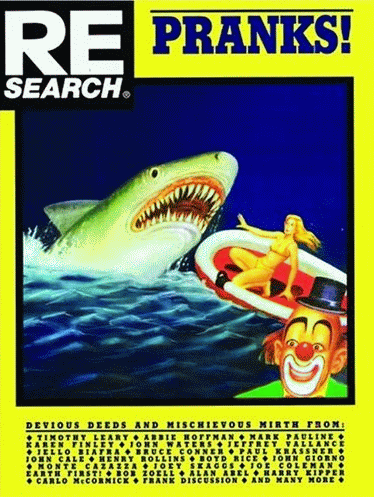
I'm not happy about having to offer the opinion that V. Vale's Pranks 2 is a wildly unworthy successor to Pranks.
Robert Duvall's capsule review: "Too thin, Rooster, too thin!" To our knowledge, Mr. Duvall is not talking about the book's lack of pages compared to the original Pranks but rather to the book's lack of content compared to the original Pranks.
Among a certain crowd the standing of the original Pranks book approaches as near to Holy Writ as can be among a crowd that largely recognizes no Holy Writ. "When the first Pranks book came out, it was such a great, influential book for me. My copy is all dog-eared. It was like the Bible. I saw it in a bookstore next to theBook of the SubGenius and realized, "Oh, there are other paths." Pranks gave me models. There were helpful suggestions, inspirationthere were lots of laughs." (Reverend Al, Los Angeles Cacophony Society)
If Pranks was the Torah, sadly Pranks 2 is no New Testament. It's more of an Apocryphainteresting in its own way, but lacking power.
Worse still, there are many pages of meandering bloviation having nothing at all to do with prankssuch as page after page of hackneyed statist claptrap from Ron English, with the active abetting of Vale (who, in his introduction, notes that "Americans have definitely become less free since 1776, hundreds of thousands of laws later," yet in the paragraph right before that moans, "It is too much to hope for our so-called legislators to come up with a bill outlawing all corporate advertising in public space." So you're simultaneously complaining that there are too many laws and that "so-called legislators" don't get busy with the lawmaking? Figure it out already, Vale, c'mon.
Granted, it would be a massive achievement if Pranks 2 came anywhere close to its predecessor, and its failure as a followup doesn't mean there isn't interesting reading to be had:
Andy, of the Yes Men:There's a French word invented by Michel Desarto: "perruque," which means: the principle of using time at work to do your own stuff. Nice concept: a widespread practice that just needed a word! (41)
John Law, of the Suicide Club:Meanwhile, I'm talking to the sergeant outside. The cops are just trying to figure out what the fuck we are doing in this abandoned building. And we just told them the complete truth; we didn't tell a single lie. (You never, ever lie to cops.) The sergeant is intelligent, trying to understand and get a handle on the situation. Finally, I said, "Well, we're kind of like a theatrical group." He goes, "Oh, a theatrical group!" He could handle that. (48)
[Cp. "It's for scale, see?"]
John Law:Fawn Brodie wrote a brilliant biography [No Man Knows My History] of Joseph Smith, the founder of the Mormons. She documented the literal contradictions and lies that were part of the initial genesis and growth of the Mormon Church, from court documents and newspaper accounts from the 1830s. Smith's creation theories were the ravings of a lunaticmuch like virgin birth or the underpinnings of these other silly religions. She was excommunicated from the Mormon church, and she later died under mysterious circumstances. (50)
[Not until 198136 years after publication of the bookof a fairly non-mysterious lung cancer ("although she had never smoked," notes Wikipedia, as if no one but smokers gets lung cancer).]
John Law:The Mormon church tried to suppress that book; they bought up copies of it. It's hard to find. Unfortunately, I gave my only copy to Larry Harvey, back when he was first starting the Burning Man cult, and I think he took a lot of lessons that Joseph Smith laid out to heart. (50)
John Law:We infiltrated the American Nazi Party; Eckankar (a peculiar "spiritual" group led by Paul Twitchell); and we tried to do est, but it was too expensive. We took a bunch of Scientology personality tests, but just as with est, at a certain point you have to start giving them major amounts of money, and we were all broke.
When we actually met the American Nazis and were around them, they weren't obvious, hideous, monstrous ogres. Yes, they had monstrous, horrible beliefs, but they were married and had families; they loved their kids; they had jobs; they were human beings who, aside from these odious views, seemed fairly normal. I found that profoundly disturbing, because aside from their confused ideas, they reminded me of people I knew. That was most disturbing. (50)
["The SS were not, by and large, psychopathic sadists. To pathologize Göth as Sadist, to demonize him and make him a monster is precisely to miss the most disturbing knowledge we now have of the average Nazi perpetrator: that he was, in an overwelming majority of the cases, not a sadist, a "deviant" or an "aberation," but rather a dutiful, law respecting civil servant carrying out his orders.
Zygmunt Bauman has persuasively argued concerning the Nazi Genocide that it is precisely this factthat most of the perpetrators of these crimes against humanity would be considered "normal" and would have passed tests administered to our own police officersthat poses the real challenge to our advanced form of society and the scientific disciplines which attempt to understand it." Robert S. Leventhal, "Romancing the Holocaust" "I am entirely normal. Even while I was doing this extermination work, I led a normal family life, and so on." Rudolf Höss (in G. M. Gilbert's Nuremberg Diary, p. 258)]
Harry Haller, of the Suicide Club:Downtown Detroit now has literally dozens of abandoned skyscrapers. Remember the Detroit race riots of the sixties? Detroit's population shifted from being, like, 80% white to being 75% black and 10% white, and many businesses just left these buildings behind. Two decades later in the Cacophony Society, I visited some friends there, brought my climbing equipment, and we spent an entire week entering abandoned skyscrapers and rappeling off them. And we didn't get caught. I love Detroitit's a great place if you like "urban exploration." (53)
Harry Haller:The Suicide Club was very underground, because the only thing that allows group pranks like this to continue happening is secrecy. The Internet is seductive when it comes to publicity and fameeverybody wants their fifteen minutesand everything gets publicized, and in no time "The Man," who uses computers just as well as the rest of us, gets wind of it and implements measures so you can't do it anymore. And now, you mostly can't do things like this anymore, so you may as well talk about what's been done. (54)
John Law, Cacophony Society:Last year we spent 24 hours underground in Paris limestone catacombs a hundred feet underneath the city. Very few people know where the entrances are. Same thing in Berlin; we hooked up with the people who wrote Underground Berlin, and they took us to underground chambers left over from World War IIwe were in the secret escape tunnel which Goering used to exit the Reichs Chancellor Building. (56)
John Law:They hoisted me up over their heads, threw a rope over a lamppost and strung me up so I was hanging about twenty feet in the air. Then all the Santas started chanting, "Kill the scab Santa! Kill the scab Santa!" [laughs] It looked like I'd just been executed by a lynch mob of Santa Clauses! That's when we realized where the line is drawn between a group and a mobit's probably just below a hundred. We had procured bullhorns for a couple of "Control Santas" who ostensibly were supposed to lead this mob, but as you can guess that didn't work very well. (58)
Vale:You recently narrated some kind of critical documentary on the Salton Sea in Southern Caliornia John Waters:I don't know how critical it is; it's a good documentary. The movie was completely finished and they came to me and asked me to narrate it. I said, "Let me see the movie." I liked it because it reminded me . . . of Baltimore and Provincetown put togetherthe two places I live in. So it is this outsider communitythey are outsiders, believe me, I'll give 'em that. And it's almost like they're in this cursed heaven. Just the whole subject matter and the whole idea of it appealed to me. It was a placevery seldom do I see new places I would like to see one day, because my idea of a "vacation" is to come home, because I live in airports, basically. So to me, it was something I knew nothing about, and I don't know that that many people know about it. And the people were so bizarre and almost like desert communities which I always like, like going to Needles, California, and places like thatI love the name, there. (141)
[Cp. Plagues & Pleasures on the Salton Sea]
Ron English (painter & billboard modifier:What turned a corner for me in the art world was when I did collaborations with Daniel Johnston. Somehow that made me "legitimate." A lot of people who hated me quit hating me. I was making paintings of his drawings, and his drawings are super-crude and weird, and people found them interesting. Vale:A documentary came out,The Devil and Daniel Johnston. Were you in it? Ron English:No. Actually, I was a little mad about that. Basically, my sister and I rediscovered Daniel Johnston living at home in Texas. He hadn't done much for years. We visited him and he gave me a huge stack of drawings. He came to New York and we did a show together; then we did a bunch of shows together. He's been active ever since, painting and making recordings. It turned out he had been on the wrong medication that had made him kinda crazy, and our visit started a chain of events that got him put on medication that made him "normal" again, so he was able to work again. However, the director of the movie had a particular story in mind. My wife had written a book about our Daniel Johnston experiences, and this director used that book, but didn't give her any credit and he didn't mention me, either. But that's pretty common, I think. Still, it's a good movie. (146)
Vale:You could also do a website of billboards that never really happened, but which look like real billboardsall thanks to the miracle of Photoshop. Ron English:But that's like faking a picture of you winning the Super Bowlit's no good unless you really did it! (149)
My first encounter with Mondo was at age nine. Uncle LeRoy and I were sitting in church, next to my grandmother. Uncle LeRoy had suffered a stroke and had not so much as mumbled a word in five years. Suddenly, in the middle of sacrament meeting, LeRoy stood up and shouted, "Oh bullshit!" He then sat down, looked at the leader and said, "Go on with your speech, Gumby." It was at that moment that I developed what I call a benevolent respect for the bizarre. (3-4)
Sometime in 1993, God told Cody Judy to tape batteries to an old radio and go to a BYU fireside meeting where apostle Howard H. Hunter of the Church of Jesus Christ of Latter-day Saints was speaking. Once there, Judy walked onto the stage, held his fake radio-bomb to the apostle's head, and announced that he, Cody Judy, was the new Prophet, Seer, and Revelator of the Mormon Church. 17,000 students sat silently for a moment, then spontaneously broke out in a rendition of "Thank Thee Oh God For Our Prophet." Judy thought they were singing to him. The tactic worked. Mr. Judy dropped his guard. Security jumped in and beat him to a pulp. (5)
David Shane Shelby, sporting an orange jail jump-suit, stood and addressed the court. "For years, I've been listening to a voice in my head . . . the commandments of God, and I obeyed them . . . I was listening to God." I remember reading this statement in the paper and thinking to myself, God has a constant dialogue with the people in Utah. He guides our state legislators to pass incomprehensible liquor laws. He's in direct contact with every eight-year-old that gives a Sunday School talk. He even helps BYU win football games; so why is it so unreasonable to assume He'd devote a few minues to talk to a fry cook at Arby's in Ogden? (40)
Richard's books were not your everyday kind of books. He read about the Sumerians, and the Babylonians, and dozens of other long-lost civilizations no one has ever heard of. He read about astrology and astronomy and water-skiing and King Arthur and airplanes and dogs and everything medieval. He liked stuff about genealogy and religion and archaeology too. . . .
He worked washing dishes in retirement homes, saved every penny, and lived off the interest. He never bought clothes, or cars, or TVs or insurance or anything that normal people bought. The only purchase I ever remember Richard making was when he bought property up by Strawberry Reservoir. He would take the Greyhound to the middle of nowhere and make the bus driver let him off. Then Richard would walk a couple of miles to where his land was, look at it, read a book, and come home. He had plans to build a yurt (a tent kind of thing popular with Afghan nomads) on his land but never did. He was just too busy reading and doing dishes. (59)
Yes, Congressman Jim Hansen loves Utah. He loves it so much he wants to sell chunks of it to Holland. Actually the chunks I'm speaking of are coal from southern Utah, and even though a Dutch company would make most the money off this deal, the black stuff itself would probably end up in Asia. There the coal would be burned and turned into smoke and power. The smoke would be used to make things like souvenir rubber tomahawks that can then be shipped back to Utah and sold in Kanab. It's a hell of an idea when you think of it. (65)
[If you read this book, see if you don't think page 65 has the exact same clip artonly reverseused for the Ghost Planet Industries logo (now the Williams Street logo).]
[Re: the Mormon church's film, Legacy:] This movie pretends a lot. It pretends that Joseph Smith looked like Tom Cruise and wasn't a polygamist, that blacks were welcome in the Church, and that the "Book of Mormon" is simply a supplement to the Bible. It never mentions Danites, or Nephites or Zarahemla or white salamanders or the Urim and Thummim. There's nothing about the Jaredites in submarine type boats crossing the ocean in 600 BC, or Kolob, or the Doctrine of Eternal Progression, where men but not women get their own planet. (81)
Contrary to popular belief, actor Crispin Glover is not the only fop to grace our city of salt and charge an exorbitant ticket price to allow entrance to a show designed to educate and introduce bewildering aesthetic theories to an audience that really just came to look at a celebrity famous for acting weird.
Over a century before Crispin's "Big Slide Show" which he put on at the Tower Theatre, there was an even bigger side show at the now defunct Salt Lake Theatre. The star of that 1882 event was none other than Oscar Wilde himself. . . .
From all accounts Oscar's lecture was about as boring as a boot and had all the levity and wit of a bull moose's fart. But he did look funny and that counted for something.
Oscar told a reporter from the Deseret News "I am quite conscious that much of what I say may be annoying, but after all I came to say it, and so long as audiences with such forebearance and good breeding allow me to strut my brief hour upon the stage I should be singularly stupid not to take advantage of my hobbies." Who can argue with that?
Perhaps a more eloquent way of stating the same thing would be, as long as people want to dish out 15 bucks to Crispin so they can observe him while he shows slides he would have to be a complete dope to say no. (82, 83)
Chilling observation from Amanda:I'm working on a death penalty case. . . . I looked at the prison records... the release date for those on death row is listed as 00/00/0000.
I've always enjoyed interviewing David Bowie. Whenever I've talked to him, he's turned me on to something new. . . . I was able to tell Bowie about Mingering Mike. He pledged to check out the album covers online. In return, he suggested I visit a place in Los Angeles called the Museum of Jurassic Technology, a gallery that exists on the border of reality and fiction. (7, 9)
Mike's only other shot at stardom came when he once sent some lyrics to a company that had advertised in a magazine. He quickly discovered the ad was a sham and didn't pursue it further. "In the back of magazines they had a little advertising section, and in the back they had about 'we'll put your songs to music' like that, and they say $39.99. I said, 'I might try it out.' Then I said, 'No, no. I know what I'll do. I'll write the most craziest, dumbest song I can think of and see if they'll tell me if it's good or bad.' So when I did send it off to them, they said, 'This is the most fantastic thing we ever heard in our life. We want your song! Send us more money and we'll get musicians and singers and...' I said, 'Uh-huh, okay.' So I left that alone after that." (109) [Cp. John Trubee's later "Blind Man's Penis"]
"So [in 1970] I went to Fort Dix in New Jersey for training, and from there I was supposed to report to Seattle, Washington. When you go to Seattle, the next stop is Cambodia," Mike says. "I just went home."
"I was like, 'Man, they're trying to throw me up in this mess.' They tell you 'Just shut up and keep moving. Do what I say. You don't have any choice anymore.' It's like a person not being in control of their destiny. If you go off to war you might just become a memory in people's minds." (116)
06jun2007 A lyric that cracks me up every time I hear it
Who's going to convince me this photo of Cremona Cremains tearing apart the Rhythm Room isn't as cool a photo of a bass player as has ever been?
5-Star Grade A recommended: James Bilagody and the Cremains, Sacred Stage. "Bow and Arrow" will reach inside of you, no fooling, even if you have only one feeling.
RobbL writes:
Yes, that's a great photo, but at best it's #2, because Paul Simonon
on the cover of "London Calling" is the champion.
By the way, she gets MAJOR points in my book for playing a Jazz Bass,
much cooler than the more common P-Bass. But P-smashin' Paul still
wins.;
Rejoinder:
1. Instrument smashing was old hat years before Simonon did it.
2. Fishnets.
3. FISHNETS.
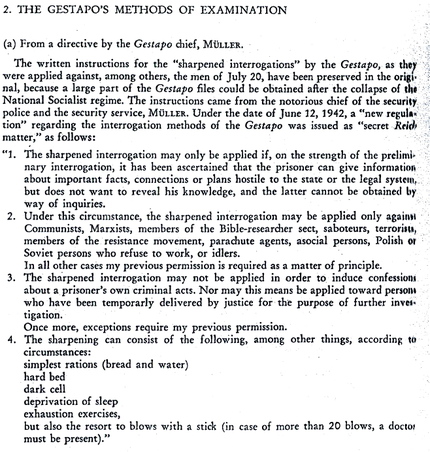
The phrase "Verschärfte Vernehmung" is German for "enhanced interrogation". Other translations include "intensified interrogation" or "sharpened interrogation". It's a phrase that appears to have been concocted in 1937, to describe a form of torture that would leave no marks, and hence save the embarrassment pre-war Nazi officials were experiencing as their wounded torture victims ended up in court. The methods, as you can see above, are indistinguishable from those described as "enhanced interrogation techniques" by the president. As you can see from the Gestapo memo, moreover, the Nazis were adamant that their "enhanced interrogation techniques" would be carefully restricted and controlled, monitored by an elite professional staff, of the kind recommended by Charles Krauthammer, and strictly reserved for certain categories of prisoner. At least, that was the original plan.
"We live in a special time in the evolution of the universe," stated the researchers, somewhat humorously: "The only time at which we can observationally verify that we live in a very special time in the evolution of the universe."
The researchers describe that modern cosmology is built on Einstein's theory of general relativity, which requires an expanding or collapsing universe for a uniform density of matter. However, an isolated region can exist inside of an otherwise seemingly static universe.
They next discuss implications for the detection of the cosmic microwave background that provide evidence of the baby pictures of an early universe.
That radiation will 'red shift" to longer and longer frequencies, eventually becoming undetectable within our galaxy. Krauss said, "We literally will have no way to detect this radiation."
The researchers followed up that discussion with one tracking early elements like helium and deuterium produced in the Big Bang. They predict systems that allow us to detect primordial deuterium will be dispersed throughout the universe to become undetectable, while helium in concentrations of approximately 25 percent at the Big Bang will become indiscernible as stars will produce far more helium in the course of their lives to cloud the origins of the early universe.
"Eventually, the universe will appear static," said Krauss. "All evidence of modern cosmology will have disappeared."
Krauss closed with a comment that he suggested is implicit in the paper's conclusions. "We may feel smug in that we can detect a host of things future civilizations will not know about, but by the same token, this suggests we wonder about what important aspects of the universe we ourselves may be missing. Thus, our results suggest a kind of a 'cosmic humility'".
So, everybody cheer up, or something!
30may2007 U.S. foreign policy as explained for Rudy Giuliani by the Brothers Warner
Our special guest today is The Bad Boy from the great old Warner Brothers cartoon A Day at the Zoo (1939).
(By the way, does anyone know the origin of that old cartoon staple "bread 'n' butter / bread 'n' butter," as performed in A Day at the Zoo by the pair of panthers? That is, why "bread 'n' butter" rather than, say, "bread 'n' water," or "sugar 'n' spice?")
29may2007 Norman Singleton at LewRockwell.com: On a recent edition of Meet the Press, Newt Gingrich offered his suggestions on how to "ensure "the forces of freedom win," . Among Newt's suggestions are "...the development of a, of a military tribunal system to lock people up the way Abraham Lincoln would've done it," and the establishment of ".... a nationwide ID card with biometrics so you can actually track everybody in the country."
There is something seriously wrong with a country where Newt Gingrich can advocate creating a police state and still be treated as a respected elder statesman and a serious contender for the presidency by both the mainstream media and the conservative movement, while Ron Paul is dismissed as a "fringe candidate" who should be silenced.
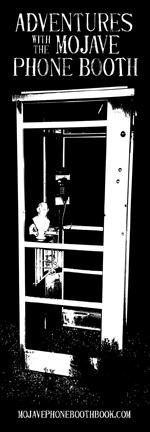
26may2007 Ten years ago this evening, I first learned of the existence of what would come to be known as The Mojave Phone Booth. Thanks again to Nick (R.I.P.), Girl Trouble, and everyone else who played along.
I'd love to be in those magazines, myself. You always hear about people suing National Enquirer. I think it's an honor! Poison Ivy (From the old green vinyl LP What's Inside a Ghoul: An Interview with Lux & Ivy of The Cramps)
On July 9, 1975 . . . the Detroit Tigers beat the Chicago White Sox 6-2 at Tiger Stadium at the corner of Michigan Ave. and Trumbull. And not far away, Gorman and Teresa Gillis were welcoming the last of their ten children into the family home in Southwest Detroit, in the shadow of the Ambassador Bridge. (7)
By all accounts, the Gillises were people who understood place, continuity, and perseverance. Hell, to stick it out in Detroit after the riots of 1967 shows that kind of backbone. But then again, Southwest Detroit had a sort of geographical immunity from some of the white flight that those riots induced. It was already working class. It was already Catholic. It already was populated with the kind of stubborn folks who weren't about to give up their home because the National Guard was called in when people decided to run riot over a city. It was off the beaten path in a way. The colossal Michigan Central Railroad stationonce the hub of Detroit's tourist, business, and commerce travelhad officially closed in 1988. (9)
That he grew up as a cultural and racial minority in the city of Detroit, actually in the city as opposed to the more lily-white suburbs, cannot be overstated as an indirect influence on the White Stripes: from their work ethic to their seeming creation in a vacuum to their reticence to trust outsiders, it all springs from geography. "There was just nothing to do in that neighborhood," remembers Suchyta. "You couldn't even shop there, really. The suburbs had everything. But we hated the suburbs. It was like the worst put-down to be called a suburbanite. We didn't understand the suburbanites . . . they had friends. We definitely identified with being Detroiters." (11-12)
Thankfully, along the way was John King Books, a Detroit institutionthree floors of used books, arcane maps, strange documents of historical significance, and, most importantly at the time, four records for a dollar. (16)
"We used to hang out in abandoned buildings like the recently closed hulking landmark Central Station and stuff and none of them ever had any thirteenth floor. . . . In the train station we'd throw toilets down the elevator shaft and stuff like that. It was on our way home from school, so we'd do that pretty frequently," says Suchyta. . . . "We'd take old stuff from those places, like, I still have a return address stamp from the Central Station. Cool old Detroit stuff like that." (18)
Toward the end of high school, on one of their sojourns to the coffeehouse in Ferndale, Jack Gillis had met Grosse Pointe resident Megan White. Grosse Pointe was only ten miles upstream as the Detroit River flows past Belle Isle, but it was a world away from the Southwest Detroit that Jack and Dominic called home. (24)
The unlikely pairing happened by coincidence. 2-Star Tabernacle was playing a show with the Demolition Doll Rods at the Magic Stick. (36)
The quote attributed to George Washington on the inside sleeve of the Stripes' debut single "Let's Shake Hands" reads like a band mission statement: "We take the stars and blue union from heaven, the red from our mother country, separating it by white stripes, thus showing we have separated from her, and the white stripes shall go down to posterity representing liberty." (45)
[Meg's] "a creative person. She was just this really artsy girl. She also knew a bunch of artists, too. She introduced Jack to this artist that only drew Captain America." [Daniel Johnston?]
"We also recorded a version of `Little Red Rooster' on his porch complete with distant Southwest Detroit gunfire. Very tasteful." (60)
White set himself apart from the other "local rock" rabble by paying attention to details like personally handing the band's singles to area writers and taking a minute to talk to them about the record, about upcoming shows, and generally walking the line between self-promotion and amiable chatting like an expert politician. This is diametrically opposed to the musicians who send their records in the mail, never follow up, and then send bitchy emails three months later when they weren't reviewed. After all, half of life is showing up and White showed up. (70)
"I remember one time that really kind of ticked Jack off was when Matt Smith made a comparison to one of our takes being like pearls before swine," recalls Buick. "And Jack always got mad about obscure references. He was anti-obscure reference." (87)
"I remember I set him up with some mike, covered with a Crown Royal bag, an old RCA mic from the '50s. I was like, `Here, use this, it'll sound older.' And he said, `no, it sounds too much like we're in a studio,'" recalls Diamond.
"And I said, `well, you are in a studio!'"
Jack didn't want the record to sound, as he described it, fake. He wanted to capture the live sound as much as possible. Diamond's response was, "If you want it to sound live, just go record it at the Gold Dollar! So we ended up putting all the vocals through a tape recorder from 1953. Like singing through the 1953 tape recorder and mike-ing its little built-in speaker. So that's why everything sounds trashy. It was made to sound that way purposefully." (96-7)
Jack's direction for the production was relatively simple. He told Sikes to make it sound good, but not too "studio." Sikes interpreted that to mean "don't flick it with piss, you know?" (145)
Jack had borrowed a large City of Detroit flag from his brother. They put it up at every stop along the way, no matter how little room there was for it on the smaller stages or how much of a pain in the butt it seemed to find the requisite adhesives and hangers to mount the thing. The White Stripes were literally flying the flag of their hometown and putting out a couple of the city's best-known acts under its gaze.
"The cool thing was that it was up for all three bands," concurs Siemasz. "And it applied to all three bands! So that whole trip had that kind of like the last gang in town vibe."
On the flag are written the words: "Speramus meliora; resurget cineribus," which translates from the Latin as "We hope for better things. It shall rise from the ashes." Suffice it to say that Jack White has a flair for his town's history. . . . So it was that over the course of the summer in which the White Stripes laid the foundation for their mainstream crossover, Jack and Meg became the unofficial ambassadors for the City of Detroit. (152)
After the first Peel show, the UK press picked up on the notion that he had said the Stripes were the most exciting thing he'd heard since Jimi Hendrix. That notion was promptly adopted into the Stripes lore.
"That's really haunting me. I never said that at all. I never make those kind of comparisons. It's like saying Tuesday is better than a piece of string. What I said was that they're likely to find themselves having things said about them like `the best thing since Hendrix.' To me that's a fatuous way of saying things. As a man who did gigs with Hendrix, I have some basis for comparison. You're not comparing like with like," says Peel. (175)
The Electric Six's campy disco-metal romp "Danger! High Voltage" . . . has one-hit wonder written in large letters across its forehead, and damned if it didn't lead to yet another chart-busting Electric Six when their equally retarded rock tune "Gay Bar" followed "Danger!" into the charts. (179)
[Michael Gondry:] "I always wanted to run away from the cliche of rock. Some of the bands that came in the same way as the White Stripes have too much of the past stuck to their butt." (198)
"I do remember Jack's mom meeting Jackass star Johnny Knoxville who had asked to come back and talk to Jack and Meg and she said to him `I don't like your show.' And he said, `You know, I don't know if my mom likes my show, either.'" (213)
Thanks to the notoriety of White's passenger in the crash, the White Stripes were never far from the headlines, even when the band was idling. Zellweger made her first appearance in Detroit gossip columns that spring, shopping at a riverfront grocery store with her no-name boyfriend. Eventually the Free Pressever the tongue-waggling fishwrapfigured out that her boyfriend was a rock star and that the rock star actually lived there. But the great thing about Detroit is that besides the office workers sipping their coffee and bored housewives, nobody really seems to give a shit about celebrity culture. So Zellweger was allowed to roam free in the music dives and hair salons of Detroit. (216)
Because military commissions were not subject to judicial appeal, they were not legally bound to follow the common-law rules of procedure. That gave [Judge Advocate General] Joseph Holt and associates the luxury of relying instead on the "laws of war." They refused to define the term. . . . It was a new form of jurisprudence -- fluid, unwritten, and in short, anything Joseph Holt wanted it to be. [Defense attorney] Walter Cox could not resist giving it a verbal jab. "What a convenient instrument for trampling upon every Constitutional guaranty, every sacred right of the citizen!" said Cox. "There is no invention too monstrous, no punishment too cruel to find authority and sanction in such a common law. Is it possible that American citizens can be judged and punished by an unwritten code that has no definitions, no books, no judges or lawyers; which, if it has any existence, like the laws of the Roman Emperor, is hung up too high to be read?" (359)
(How shocked would Cox be if he could see ahead to our day, in whichaccording to the Supreme Courtnot only accused criminals but everyone in the U.S. is subject to "secret laws"?)
At New York's Cooper Union, Abraham Lincoln issued his own closing comments on the Harper's Ferry incident. He denied that any member of his party had been implicated in Brown's plot, and he told his listeners that the raid had always been doomed to failure. "That affair, in its philosophy, corresponds with the many attempts . . . at the assassination of kings and emperors," Lincoln said. "An enthusiast broods over the oppression of a people till he fancies himself commissioned by Heaven to liberate them. He ventures into the attempt, which ends in little else than his own execution." The same might have been said of John Wilkes Booth in 1865. (107)
(Or ten-thousandfold moreso of Abraham Lincoln at any time from 1860 to the end of his life.)
If, however, the military fortunes of the Confederacy had followed a more favorable course leading up to 1864, a dissatisfied Northern electorate just might have voted in a new president who would have been willing to extend overtures to end the war. Roger L. Ransom, The Confederate States of America: What Might Have Been (121)
17may2007 Breaking news: Only you care that you ran 10 kilometers.
Scourge of internet person name searching: Lists of footrace results.
Scourge of thrift store t-shirt browsing: Freebie t-shirts commemorating footraces.
If you watch today's Republican candidate debate forum, count how many kiss the dead ass of Jerry Falwell.
14may2007 Last night I watched Animal House with a grown-up, adult person who had never seen it. I know! I have no idea how anyone could have missed it. But it was fun, like seeing seeing boobs and beer and hijinks through virgin eyes. Awwww! I'm like an Enya song.
Anyway, thanks to Robb for being some sort of Commie who grew up in a hollowed-out log deep in the Appalachians, I would have to guess.
DP, on Weschler's Mr. Wilson's Cabinet: That's amazing that it almost got the Pulitzer Prize. It must be written pretty good.
DoC: DP, you are a prize.
DP: Well . . . it must be written pretty good, if it almost got a Pulitzer Prize.
Mitch Hurwitz: We got the call from the network about her hatthey hated her hat. Portia de Rossi: What? Hurwitz: Yeah. We'd already shot a day. And Jim Vallely came up with, like, instead of trying to get rid of the hat? Let's really highlight the hat. [Laughter] Hurwitz: That's why we have that scene: "Don't forget . . . your hat!" [Laughter] Hurwitz: And then we actually even zoom in on the hat, at the end of the show. David Cross: What a ridiculous waste-of-time note that is.
♣ The moment I switched on the radio yesterday morning, Diane Rehm was asking Cullen Murphy to "give us a brief summary of the rise and fall of the Roman Empire."
♣ Stoned Cop Thought Wings Win Was a Hallucination (Be sure to listen to the 911 audio linked from that page)
The great thing is how the cop and his wife were not charged with any of the multitude of crimes you or I would be charged with in the exact same situation.
Rock became the sole property of white dopes high on punk. (2)
Spungen had introduced Vicious to the full-time occupation of wondering where the next fix was coming from. (30)
Verlaine and sidekick Hell shared a chummy chuckle when they auditioned fellow heroin-enthusiast Dee Dee Ramone and blackballed the blank bassist's entry to the band when it transpired that one could count the number of chords Dee Dee knew on his waxy ear-holes. (52)
In the UK, punks are prepared to pay out hard cash for expensive albums by bands who could just as easily have been standing behind them in an audience. (59)
These days, the California judicial system only threatens to come down hard on coke criminals who have information they wantas in the case of Anjelica Huston, an actress who testified that her close friend film director Roman Polanski had taken a 13-year-old girl into a bedroom. Her revelation caused her possession of cocaine charge to be dropped, and forced Polanski to plead guilty. (70)
Acid (as it came to be known, man) was an inward-bound experience for cosmic cretins born too early to line up for Star Wars. (71)
Amphetaminethe only drug that makes you sit up and ask questions rather than lie down and lap up answers. (72)
Of the Mod bands, the manufactured Who sang their melodramatic fantasies of what they imagined the amphetamine lifestyle to be and reached a credulous mass audience, while the Small Faces were the archetype who had lived the life before they were ever in a band. In "Here Comes The Nice" they said more in three minutes about Mod than Pete Townshend said in thirty years. (73)
Moreso than usual, I mean. Can't be "Memorial Day" (zzzzzz) or "Armed Forces Day" (WTF??), because both are apparently not for a few weeks, as if I would give two shits when they are, but anyhow, as part of the propagandafest, just now on the baseball game one of the announcers proudlyyesannounced that their broadcast was going out over Armed Forces Radio to U.S. Military Personnel in 176 countries around the world.
ONE HUNDRED AND SEVENTY-SIX.
Or, according to Wikipedia, 177. ("Wherever large numbers of US troops are deployed, the AFN sets up operation, providing news and entertainment from home. Today AFN has several satellites and uses advanced digital compression technology to broadcast TV and radio to 177 countries and territories.")
If this is not empire, what is? That's Your Armed Forces, folksOut There, pissing off people all over the globe, so as to continue to create the need for (and provide job security to): Your Armed Forces.
I don't have a PC actually, but my girlfriend is a keen PC user, a great surfer of the Internet. . . . And some of these sites she's dug up contain accidental poetry that is quite moving. I remember when she first got a PC about six or seven years ago, there were these "telephone booths in the Mojave desert" sites. I can't remember the theory of it, but there was some strangely poetic business about this telephone booth which was still functioning. I can't remember what the exact point of it was, but it became a kind of talismanic object.
The pest-control cops launched a seven-week probe, concluding that Hanley can do the work. He just can't tell people why he's doing the work. Thus, his sales pitch"Keep birds and rodents from invading your home"has to go.
Gervase said the state would have no problem if Hanley says he's covering vents to keep leaves out. "But if he's advertising that he can keep pests from invading your home, that's pest control, and you need a license for pest control."
Actually, three licenses.
In addition to a $75 business license, Hanley would need an applicator's license. To get one, he would have to pay $30 and take a test on pesticides.
He'd have to study 25 pages of laws and 18 pages of rules and several books, including a real page-turner, Truman's Scientific Guide to Pest Management Operations.
And still he wouldn't be qualified to advertise that he covers vents to keep rats out.
In order to make such a highly technical claim, he would then have to go to work for a licensed pest control company.
Then, once he had 3,000 hours of experience, he could pay $150, take a test and get a qualifying party license.
Hanley is not amused. He is so not amused that he's contacted the Institute for Justice.
Legalized extortion, protectionism, monopoly: This. Is. Licensing.
As someone who made a career out of using force to back up any and all laws, do you suppose former officer Hanley now understands the nature and character of "authority"?
Eddie: Clevelandit's a beautiful city. Eva: Yes? Eddie: Yeah. It's got a big, beautiful lake. You'll love it there. Eva: Have you been there? Eddie: No.
And again:
Willie: You ever been to Florida? Eddie: Florida? It's beautiful down there. White beaches, girls in bikinis, Cape Canaveral, Miami Beach. They got pelicans down there, and flamingos. Willie: You been there? Eddie: No, I never been there.
From the television broadcast of the Arizona Diamondbacks home opener vs. the Cincinnati Reds, 09apr2007:
Mark Grace: Springerville is just east of Show Low, right near the New Mexico border. BEAUTIFUL area! Just beautiful. Daron Sutton: You been there? Mark Grace: No.
(I wonder how "green" the Subaru Imprezas are, the ones advertised with Sheryl Crow's earworm song about the winding roads?)
23apr2007 His Ninth is most strange. In it, the author hardly speaks as an individual any longer. It almost seems as though this work must have a concealed author who used Mahler merely as his spokesman, as his mouthpiece. This symphony is no longer couched in the personal tone. It consists, so to speak, of objective, almost passionless statements of a beauty which becomes perceptible only to one who can dispense with animal warmth and feels at home in spiritual coolness. We shall know as little about what his Tenth (for which, as also in the case of Beethoven, sketches exist) would have said as we know about Beethoven's or Bruckner's. It seems that the Ninth is a limit. He who wants to go beyond it must pass away. It seems as if something might be imparted to us in the Tenth which we ought not yet to know, for which we are not yet ready. Those who have written a Ninth stood too near to the hereafter. Perhaps the riddles of this world would be solved, if one of those who knew them were to write a Tenth. And that is probably not to take place. Arnold Schönberg, Style and Idea, p. 470
Montana state government to the Feds re: their "Real ID" bullshit
Meanwhile, the Vermont senate has voted to call for the well-deserved impeachment of both Bush and Cheney. At one time this sort of a vote would have had actual effect, because up until 1913 U.S. senators were elected by their state legislatures, instead of by popularity contest popular vote. Under that scheme, where states were actually states, Vermont's two senators would now be obliged to work in the U.S. senate for impeachment trials. As things are today, Vermont's two senators will probably meet with major contributors and take fact-finding trips to Bermuda.
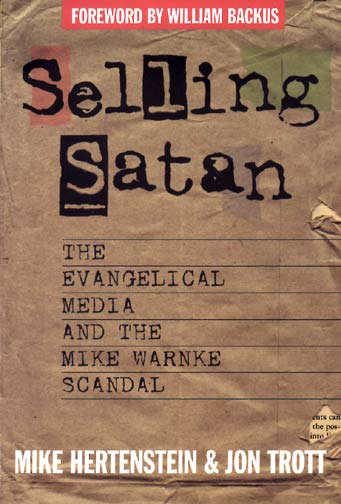
19apr2007 From Selling Satan, by Mike Hertenstein & Jon Trott (an exposé of self-proclaimed "ex-satanist high priest" Mike Warnke):
Autumn 1991. Not "church," but "Christian Center"like shopping centerwith a towering marquee on the highway side and a phony-colonial design that would fit comfortably into Heritage Village or Main Street USA. Here we stood, Christianity in America, twenty centuries down the road from catacombs, cathedrals, and steeples in the public square. (1)
That story, as told inThe Satan Seller, was by now woven into the fabric of evangelical pop culture: a young orphan boy, raised in foster homes, drifted from whatever family and friends he had to join a secret, all-powerful satanic cult. First, he descended into the hell of drug addiction. Then he ascended in the satanic ranks to the position of high priest, with fifteen hundred followers in three cities. He had unlimited wealth and power at his disposal, provided by members of Satanism's highest echelon, the Illuminati. And then he converted to Christ. (3)
Yet Lois did have some good memories of Mike Warnke. . . . "I don't regret having known him. I'm just glad I didn't marry him." (61)
Formidable chronological problems exist in The Satan Seller. . . . These discrepancies could have been uncovered by anyone else in the past twenty yearswith minimal research. But nobody took the time to do the math. (63)
The professor shook his head slowly in disbelief. "I taught here during those years, and we never, ever asked for or had any LSD experiments take place on this campus. For heaven's sake, this is only a two-year junior college!" (68)
"The times were right for that sort of testimony. People wanted to hear that their worst fears were true." (141)
There seemed no limit to what Christian audiences were willing to acceptas long as the main character gave his heart to Jesus in the end. (174)
One thing disturbed Karen, she recalled. "Mike liked to introduce me as a former hippie or drug addictwhich I'd been, but I wasn't proud of," she recalled. "Then he started introducing me as a former prostitute, which I'd never been. I had to ask him to stop." (179)
Later the police officer did come through with some information in the form of sketchy cop-talk: "My sources within the department indicate an individual with the name you gave me was involved in activities similar to what you outlined." (182)
[Warnke] "told me about the verse in Genesis that talks about angels of God visiting the daughters of men and creating a race of giants. And he told me he and I were born out of that unique race and that we were giants with special powers." (185)
Carolyn said the two went for a drive and Warnke stopped at a convenience store. "He asked what kind of cigarettes I used to smoke, and I said, `Pall Mall Gold. Why?' He just shut the door and kept on walking. I went, `Uh-Oh.'" Warnke returned to the car, according to Carolyn, with "two bottles of Annie Greensprings wine, two packs of cigarettes, and a package of peanut-butter cookies." That day they began an affair. . . . (186)
Danny Taylor . . . noted, "Mike and Carolyn came to Nashville to hide. Because you can hide in Nashville." (193)
One question it would have been appropriate to raise at this key juncture: How could Word/Myrrh know if the satanic story they were about to mass-produce and distribute around the world was true? But nobody asked. "It was just accepted," Huey told Trott. (203)
Added Mike Johnson, who often toured with Mike on his road trips, "It was pretty consistent money for a guy with a mouth and a bag of records. He didn't need anything, not even a guitar. He just talked for forty-five minutes." (214)
Concluded Carolyn, "Mike Warnke was one of the greatest con artists I've ever known in my life. And coming from my background, that says quite a bit." (236)
Mike Warnke began offering his expertise on the horrors of Satanism to law enforcement agencies and national media. Warnke appeared on ABC's "20/20," "Oprah Winfrey," and "Larry King Live" as well as countless local shows. He was cited frequently as a reference in print media, both on Satanism and other subjects: the Warnkes did a series of articles for the Christian magazine Family Life Today with topics ranging from parenting teenagers to popular music. They also shared their parenting tips on James Dobson's "Focus on the Family" radio program. (256)
Jon Trott went on his evidence kick again. He called Larson's publisher, Thomas Nelson Publishing, and asked to see some evidence for the grisly stories in the book, like the one about the little girl who was stripped naked by Satanists and pulled through the rear end of a dead horse. A Nelson spokesperson hemmed and hawed, initially claiming evidence existed, then backed away stating that the book was meant only as entertainment. "Like the part about the little girl and the horse?" Jon wondered, "or the part about her performing fellatio on the Satanists?" Nelson eventually pulled the "based on actual accounts" blurb before the book went to press. The parts about the horse and fellatio stayed. (286)
The ex-seminar director's charges were a dubious combination: Warnke Ministries was a fraud, he claimed, yet he had been improperly discharged from that fraud. Cooper's lawyer, William Stevens, demanded a half-million dollars. (335)
One reader of the Southern California Christian tried to call what she believed was the phone number for that regional paper, but accidentally called Cornerstone. She was quickly on the line with Hertenstein. No, she said, she hadn't read the Cornerstone article, just the brief synopsis in her own regional paper. And no, she didn't want a copy of the original article to see the evidence.
"What is all this talk about evidence?" she said, offended by the very idea of checking up on Warnke's story. "I don't want to look at any evidence. God has given me the gift of discernment. And I feel in my heart that Mike Warnke is the one who is telling the truth." It was quickly obvious this discussion was going nowhere, but the woman wouldn't get off the line. Hertenstein finally appealed to the highest authority: "Ma'am, I honestly feel in my heart that God led me to do the article on Mike Warnke." The woman was stopped in her tracks and politely ended the conversation. (369)
A Texas woman named Beverly phoned Cornerstone and said she was confused. . . . "There's a lot of people out here who have always supported both Cornerstone and Warnke Ministries and now we just don't know what to do. What does this all mean?"
"Maybe it means that God is calling people to a greater level of discernment. I guess you'll just have to look over all the evidence and statements that have been presented and decide for yourself."
"But that's so hard. I don't like having to do that."
"I know," said the writer. There wasn't much else to say. (395)
[During an interview with Anton LaVey:] Jon Trott had been waiting for an opportunity for some subversive evengelism. He leaned forward and observed, "I've always thought of Jesus as an iconoclast. He certainly presented a challenge to the status quo of his day. . . .
LaVey saw his point. "If Jesus existed," he conceded, "then he probably would have been a Satanist. Not a devil worshiper, but a Satanist in the sense of being an iconoclast."
That was something we had never considered, we said. (425)
Perhaps sensing that we might try to preach at him before the evening wrapped up, LaVey announced, "I get piles of religious tracts from people trying to convert me." He told us about a form letter reply he'd composed for such letters. . . .
Dear ______:
Thank you for your enlightening and inspirational letter (tract). I am touched by your prayers, and because of the dire warnings and accusations you have leveled upon me, have chosen to see the light. You are the person I have been waiting for to lead me to Jesus, when all others have failed.
I now see the folly of my actions and can perceive how I was taken in by Satan and used as a tool to destroy innocent minds and bodies....
...Surely your wisdom must be matched by your generosity, so perhaps you would like to help me bring others to Jesus who have been ensnared by the Devil's lies....
Enclosed is a return envelope in which you might place your offering....
LaVey smiled a naughty smile, revealing a missing front tooth. "Can you imagine what would happen if I suddenly announced that I'd seen the light?" he hisses, eyes twinkling. "I could really make a bundle." . . .
Jon shook his head. "If by some miracle you ever do become a Christian, do yourself and everybody else a favor: disappear. We don't need any more celebrity conversions. And we certainly don't need any more ex-Satanists on the circuit."
LaVey assured us this would not be the case. "You don't have to worry about me," he said. "There will be no deathbed recantations." Still softly playing hymns, he closed his eyes and let his head drift back as he lost himself in a private ecstasy. (428-9)
We're doing out best to have the most desired web site in the world and sell all of our goods like everybody else is trying to do. And, of course, the competition is great, but the opportunity's vast. I'm not educated about computers, and I don't have any business talking about them, but they're upon us, and it looks like they're gonna make us educate ourselves to deal with them. I guess a guy like me has to talk about hiring a roomful of people to look at one of those computers. You see those rooms where somebody, some guy, some entrepreneur has a bunch of people in there watching the computers. It's kind of funny to me, actually. Then they'll have on a cell phone at the same time. They'll be reading e-mail and talking to somebody on a cell phone and getting paid, by God. Merle HaggardThat's my trade. I'm an irony dealer. I mean, that was an ironic statement. Irony is what I deal in from the moment I wake up until the moment I go to sleep. I am weary of it, though. To me, irony is snobbery in a way. There's no irony in Bangladesh. What's so-bad-it's-good if you're hungry? [Laughs.] Baltimore is very un-ironic, and they're not impressed with anything. People who like irony are impressed with anything. People who don't could give a shit. They don't care if you like them, and they're not "with it" . . . With what? They think you're an asshole! I like to be around people like that sometimes. I don't want to be around witty people all the time. I know enough of them. John WatersI have four kids, all from the same wife, all from the same husband, I think. I've been home four times in my career, and my wife was high or something each time. I'm a good, solid family man. I don't say I'm a good solid man, but, you know. They always love me. They don't always like me, and I deserve that. Rick Nielsen of Cheap TrickThings are planned to a degree. . . . You don't want Matt Dillon to come out and no one's ever talked to him, and we have no idea what we're gonna talk about and just go fishing, because too often the result is going to sound like a conversation you'd have with some stranger on a bus. . . . Like, say Matt Dillon was a male prostitute in the late '70s, and that's how he earned money. If I know that in advance, and I know he's willing to talk about it, that's a good thing to have in your back pocket, because it's something we would have in common. Conan O'BrienI used to do college dates, and I actually had to stop doing them because it was just . . . David Sedaris, in one of his books, has a great thing about how, when you work in front of the public, you really want to view people as unique, special, and rare unto themselves. But, then, the more time you spend, the more you realize everyone's the fucking same. I used to do these college dates. I'd go and make a month's rent in one night, so it was kind of hard to say no, but I had to stop doing them because it got so sad, like, people in the Q&A part going, "Are you ever gonna win a staring contest? Ha ha ha!" And it's not their fault. That's, I guess, a relatively clever question if you're a fan of the show, but after the 10th time, it started to make me feel really sad. When I started, I thught, "I'll talk about the show, but I'll also try to throw in my personal take on my journey through show business." A lot of people basically d a one-sided interview. So I did that, and I found out more and more that, as I did it, nobody gave a shit what I thought. They just wanted to know, "Who's the Masturbating Bear? Who's in that? Who came up with that?" . . . Where do you go from that? Andy RichterThat's where I get pissed off at a lot of my younger readers. I come on avuncular sometimes and say to a young guy, "Son, what are you doing? I'm your dad. I drank, I used drugs, I hate William Burroughs, I hate Hunter Thompson, I hate Charles Bukowski, I don't think any of 'em were worth a shit, and none of 'em can write, and William Burroughs is a misogynist cocksucker who murdered his wife." People can't take that. James Ellroy
17apr2007 Extra-random snippets from William Gibson's Pattern Recognition (kindly recommended to me by Puzzling Evidence, though I've now forgotten in what connection; a month can do such terrible things to a man's mind):
What is that, to be over thirty and not know where you'll be in a month or two? (88)
"The market is not entirely rationalized, you see."
"Rationalized?"
"Not yet established as a global specialist environment. As has long been the case, for instance, with rare stamps, or coins. Or, to almost that degree, with the clocks Greenaway deals in. Values are only just being established for Curta calculators. One still finds the odd example gathering dust on a shelf, perhaps for relatively little. All such markets are being rationalized by the Internet, of course."
"Are they?"
"Absolutely. Hobbs himself . . . is responsible for that, to some degree."
"How?"
"eBay," says Ngemi. "He's very adroit there, and has sold many Curtas to Americans, always for more than they would fetch here. Global values are being established." (230-1)
[So that's what happened to my dream of retiring on the proceeds of the sale of my childhood baseball cards. . . .]
His shoes are black four-eyelet DMs, the ur-Martens of the first decade of punk, long since de-recontextualized into the inexpensive everyman's footwear they'd been designed to be. (235)
"Police cars, no! Those are the cars of important people, of the rich, or those who work for them. They have purchased a permit allowing ignorance of traffic regulations. Blue lights are courtesy to others, a warning. It seems strange to you?" (285)
"Come on out to California, Mom," he said, shouting because he was on long distance, which was still a novelty, used only for death and celebration. (29)
"Well, I went to see one of their policemen over in East Germany, you can just imagine." Mrs. Brown was not as reticent as I had expected. "My goodness, he was a pompous man. I asked who he thought did it and he looked at me as if I were just plain crazy. I'll never forget it. He said to me, `There are three things to consider. First, crime. Second, suicide. Third, accident.' She hesitated. "Then he said, `One. We do not have crime in the GDR. Two. We know Dean well and he would never have committed suicide. Three, therefore, it was an accident.'" (30)
December 7, 1942, when the Japanese attacked Pearl Harbor. Dean Reed was four years old. (32)
[December 7, when, now?]
"Dean did not kill himself," said Phil Everly when I met him in Burbank a week after I saw Ruth Anna Brown in Hawaii. "He was a good laugher and a guy that laughs does not kill himself," Everly said. (34)
[Tony Hancock, Will Cuppy, Micke Dubois, Drake Sather, Freddie Prinze, Charles Rocket, Doodles Weaver, Richard Jeni notwithstanding. Also Salvador Allende.]
It seemed as if, beyond the Berlin Wall, for decades Darth Vadar [sic] had ruled, evil, unknown, shuttered. (46) It was as if Darth Vadar[sic] had not only pulled up his vizor, he'd taken off the whole damn costume. (321)
The production of records required similar ingenuity, which was howRecords on Ribswere invented. You stole X-ray plates, which were made of a thick plastic material, rounded out the edges with a pair of scissors, cut a hole in the middle, and recorded on top of them. In the underground, rock music was produced on pictures of somebody's lungs. I saw them, these incredible artifacts, and you could actually see the ribs while the needle went around and around. Young hustlers who sold them on the street secreted the records in their coat sleeves because the X-ray material was pliable and you could fold it over. (79)
Sometimes, late at night, you could still catch Adios Sabata on TV. In it, Dean worked with Yul Brynner. Dean was taller than Yul, but Yul was the star, so Dean played their scenes standing in a hole on the beach that had been specially dug for him. Dean told the story for laughs, but it clearly got up his nose that he was less important than Yul. (119)
Idolized by fans, his politics acceptable to the Party, Dean became a minor but potent player in the East. He claimed to know Erich Honecker and Gustav Husak. He made speeches and was honored by the Czechs with the Julius Fucik Medallion. He played concerts in Sofia and the Bulgarians presented him with the Dimitrov Medallion. Every ghoul in Eastern Europe, I thought, the whole bunch of them had honored and celebrated Dean Reed. (135)
Not much in the East shocked me more than the way these countries degraded their own currency. It erode